You scrub the bathroom tiles every week. You use spray-and-wipe, you rinse thoroughly, and yet — no matter what you do — those grout lines keep turning darker. First grey, then brown, and eventually a stubborn, ingrained black that no amount of bleach seems to shift. If this sounds familiar, you are not alone, and more importantly, you are not doing anything wrong.
The truth is that grout is structurally designed to get dirty. Understanding why — and what is actually living in those black lines — changes how you approach the problem entirely. This article explains the science behind grout discolouration, the hidden health risks it creates, and why professional cleaning is the only way to genuinely fix it for good.
Why Grout Gets Dirty So Much Faster Than Tile
To understand why grout turns black, you first need to understand what grout actually is. Standard grout is a cement-based material — slightly porous, slightly rough in texture, and usually light-coloured. These three properties combine to make it the weakest link in any tiled surface.
Tiles, by contrast, are relatively easy to keep clean. Their glazed, non-porous surface means that soap scum, dust and hard water deposits sit on top and can be wiped away. Even natural stone tiles — marble, travertine, slate — while more porous than ceramic, are generally smoother and less absorbent than the grout that surrounds them.
Grout behaves more like a sponge. Every time you mop the floor, shower, or cook, the grout is absorbing a small amount of whatever is in the water — dirty rinse water, soapy residue, cooking grease, body oils. Over months and years, these substances penetrate deep into the pores where no surface wipe can reach them.
The key insight: Most of what makes grout black is not on the surface — it is inside the grout. This is why scrubbing with a brush and household cleaner provides only temporary relief. You are cleaning the top layer, but the embedded contamination remains.
The Seven Causes of Black Grout
There is rarely a single cause of grout discolouration. In most homes, several of the following factors are working simultaneously — which is why the problem compounds over time.
1. Porosity and Absorption
This is the number-one factor. Unsealed or worn-sealer grout acts like a sponge, absorbing dirty water, soapy residue, cooking grease and coloured liquids deep into its pores. Once these substances are embedded, wiping the surface has no effect on them whatsoever.
2. Mould and Mildew Growth
Grout's rough, porous surface and its tendency to retain moisture make it an ideal breeding ground for mould and mildew. In bathrooms and kitchens — where humidity is consistently high — mould spores settle into the grout and multiply. The result is those characteristic black, dark green, or grey spots that appear to return within days of cleaning. This is because you are killing the surface mould but not the colony living inside the grout.
3. Soap Scum and Body Oils
In showers, soap residue combines with the minerals in hard water (calcium and magnesium) to form a sticky, chalky film. On tiles, this wipes off easily. In grout, it penetrates and accumulates. Body oils from skin, shampoos and conditioners behave similarly — they cling to the grout's texture and attract further dirt, gradually darkening the lines from white to grey to brown to black.
4. Efflorescence
In wet areas like shower floors or outdoor tiles, moisture moving through the grout from below can draw mineral salts to the surface. As the water evaporates, it leaves a white or grey powdery deposit — a phenomenon called efflorescence. Over time, this combines with other contaminants to create a stubborn, layered discolouration that is particularly difficult to remove.
5. Rust and Metal Stains
If your water supply has a high iron content, or if metal objects — shower caddies, tin cans, tools — sit on damp grout for extended periods, rust stains can chemically bond with the grout material. These are among the most difficult stains to remove and often require specialist treatment.
6. Dirt Embedded in Texture
The slightly rough, sandy texture of sanded grout physically traps fine dirt particles that sweeping or vacuuming cannot dislodge. Every footstep on a tiled floor pushes a small amount of fine grit and soil into the grout surface. Over years, this mechanical trapping builds up a layer of embedded particulate matter that contributes significantly to overall darkening.
7. Worn or Missing Grout Sealer
Grout sealer creates a protective barrier that dramatically reduces absorption. In dry areas, sealer can last three to five years. In wet areas like bathrooms, it typically needs replacing every one to two years. Once the sealer wears off, the grout becomes immediately susceptible to all of the above factors simultaneously — which is why grout that was once clean can deteriorate rapidly.
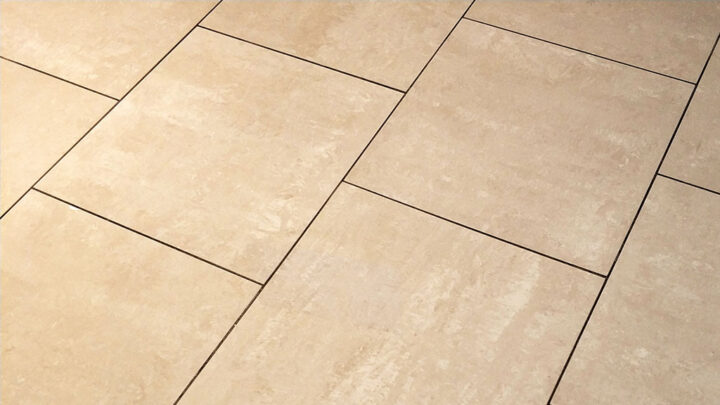
Professional tile and grout cleaning reveals the true colour of grout lines that years of household cleaning cannot restore.
Tile vs. Grout: A Comparison
The following table summarises the key differences in how tiles and grout respond to the same contamination sources — which explains why your tiles can look clean while the grout lines remain stubbornly dark.
| Contamination Factor | Impact on Tile | Impact on Grout |
|---|---|---|
| Porosity | Low to none (except natural stone) | Very high — absorbs everything |
| Soap Scum | Surface film, wipes off easily | Penetrates deeply, darkens and yellows |
| Mould & Mildew | Grows on surface, easily removed | Grows inside the material, very hard to remove |
| Oils & Grease | Sits on top, wipes off | Absorbs deeply, causes permanent staining |
| Abrasive Dirt | Can scratch gloss finish | Gets physically embedded in texture |
| Cleaning Ease | Easy — wipe or spray | Difficult — requires deep penetration and extraction |
The Hidden Health Risks of Black Grout
Black grout is not just an aesthetic problem. What looks like harmless discolouration is often a combination of mould colonies, bacteria, and accumulated allergens — all of which can affect the health of your household, particularly for children, the elderly, and anyone with respiratory conditions.
Mould and Respiratory Health
Mould requires two primary ingredients to thrive: moisture and organic material. Bathrooms and kitchens provide both in abundance. Once mould spores settle into porous grout, they multiply and produce mycotoxins — toxic compounds that can trigger respiratory problems including asthma, chronic coughing, and wheezing. In individuals with weakened immune systems, mould exposure can lead to more serious infections. The critical point is that mould growing inside grout cannot be killed by surface cleaning alone; the colony must be extracted from within the material.
Bacterial Contamination
Kitchen and bathroom grout is frequently exposed to food particles, grease, and moisture — conditions that support the growth of bacteria including E. coli and Salmonella. When grout remains uncleaned at depth, it becomes a hotspot for bacterial activity. Biofilms — thin, slimy layers of microorganisms — can develop on dirty, moist grout and house pathogenic bacteria that resist standard household cleaning agents. Cross-contamination from kitchen grout to food preparation surfaces is a genuine concern in homes where tile cleaning is infrequent.
Allergen Accumulation
Grout does not just absorb moisture — it also collects dust, pet dander, and pollen over time. These particles accumulate in the grout's porous structure, turning grout lines into a reservoir of allergens. Every time you clean or move through a tiled space, these allergens can be disturbed and released into the air, worsening conditions like hay fever, asthma, and sinusitis.
Important: If you can smell a musty or mouldy odour in a tiled bathroom or kitchen — even if the grout does not look visibly black — this is a sign that mould is present inside the grout and potentially behind tiles. Do not attempt to mask it with air freshener. Professional assessment is recommended.
Why DIY Methods Only Go So Far
Baking soda paste, white vinegar, oxygen bleach, steam mops — these are all popular DIY approaches to black grout, and they all share the same fundamental limitation: they work on the surface, not inside the grout.
Vinegar and bleach can kill surface mould and lighten the appearance of grout temporarily. However, they cannot penetrate deeply enough to extract the embedded oils, bacteria, and mineral deposits that are causing the discolouration. Within a few weeks, the grout returns to its previous state — or darker, if the cleaning process has further opened the pores by stripping away any remaining sealer.
Scrubbing with abrasive brushes carries its own risk: over time, aggressive scrubbing erodes the grout surface, creating more texture and more surface area for contaminants to embed. This is why grout that has been scrubbed repeatedly for years often deteriorates faster than grout that has been left alone.
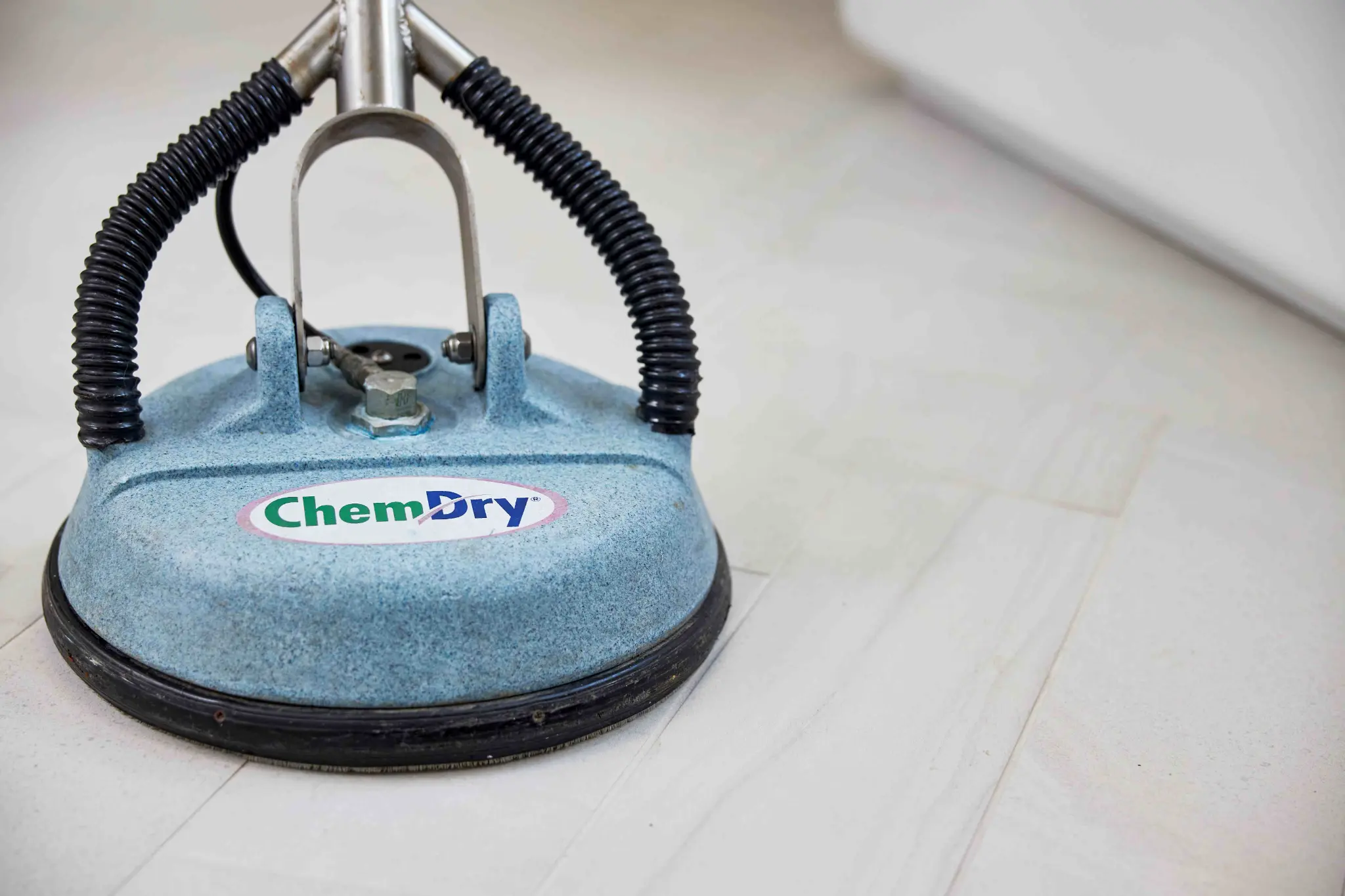
Chem-Dry's specialised tile and grout cleaning equipment uses high-pressure hot water extraction to remove embedded contamination that household methods cannot reach.
How Professional Chem-Dry Tile and Grout Cleaning Works
Professional tile and grout cleaning is fundamentally different from household cleaning because it works from the inside out. Rather than applying a cleaner to the surface and wiping, professional equipment forces high-temperature water and specialised cleaning solutions deep into the grout's pores under pressure, then extracts the loosened contamination — along with the water — using powerful suction.
The Chem-Dry process for tile and grout cleaning delivers several specific benefits that household methods cannot replicate:
Deep, Penetrating Clean
The high-temperature water and cleaning solution penetrate deep into the pores of the grout, loosening and removing embedded dirt, oils, soap scum, and bacteria that have accumulated over years. The result is a restoration of the grout's original colour — not just a surface lightening that fades within weeks.
Eradication of Mould, Mildew, and Bacteria
Our tile and grout cleaning process is highly effective at killing and removing mould, mildew, and harmful bacteria from within the grout material. This does more than improve the visual appearance of your surfaces — it eliminates the biological hazards that contribute to poor indoor air quality and health issues. Surface mould returns quickly because the colony inside the grout survives. Professional extraction removes the colony itself.
Preservation of Grout Integrity
Scrubbing grout with harsh chemicals or abrasive brushes erodes the material over time, creating more surface area for future contamination. Our hot water extraction process combines with controlled agitation to remove dirt and stains without causing structural damage to the grout, thereby extending the lifespan of your tiled surfaces.
Sealing for Lasting Protection
Once your tiles and grout have been professionally cleaned and restored to their original colour, we apply a durable sealant that creates a protective barrier against future contamination. Sealed grout repels moisture, oils, and dirt rather than absorbing them — making your regular cleaning routine far more effective and dramatically slowing the rate of re-discolouration. In wet areas, we recommend re-sealing every 12 to 18 months to maintain this protection.
The maintenance benefit: Professionally cleaned and sealed grout is significantly easier to maintain between cleans. The same weekly wipe-down that previously had no effect on embedded grime becomes genuinely effective when the grout has a protective seal and no embedded contamination to work against.
How Often Should Tile and Grout Be Professionally Cleaned?
For most Australian homes, a professional tile and grout clean every 12 to 18 months is sufficient to maintain clean, hygienic surfaces and extend the life of the grout. In households with higher traffic, children, or pets, or in areas with particularly hard water, annual cleaning is advisable.
Kitchens and bathrooms — where grout is exposed to the highest levels of moisture, grease, and biological contamination — benefit most from regular professional maintenance. Outdoor tiles and pool surrounds, which are exposed to the elements and organic debris, may also require more frequent attention.
The practical test is straightforward: if your grout lines are noticeably darker than their original colour and household cleaning is no longer making a visible difference, it is time for a professional clean. The longer you wait, the deeper the contamination embeds and the more intensive the treatment required.
Ready to Restore Your Tile and Grout?
Our experienced technicians serve the Northern Beaches, North Shore and greater Sydney. Professional tile and grout cleaning with sealing — call for a free quote today.