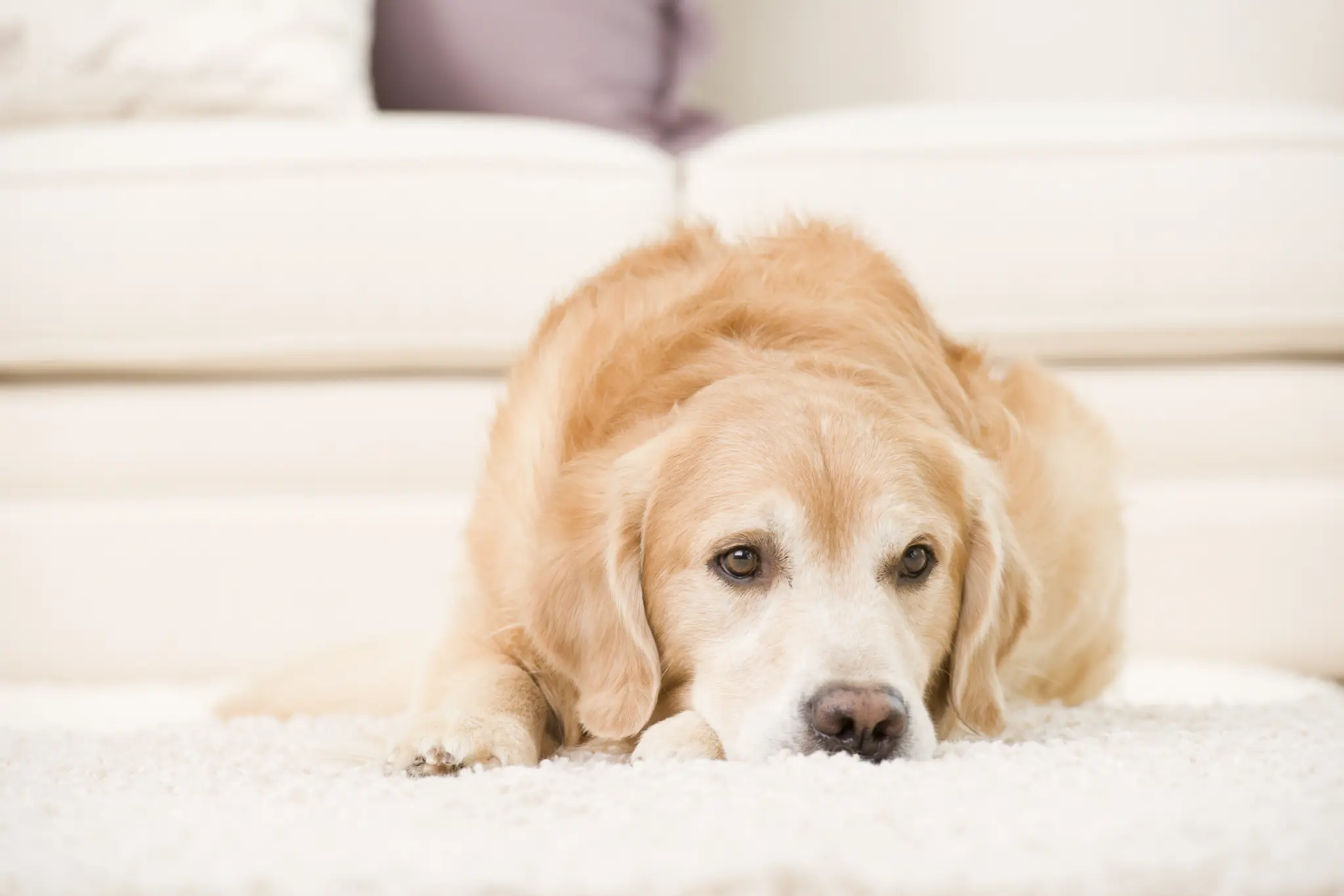
If you have ever cleaned a pet urine stain only to have the smell return days later — sometimes stronger than before — you are not imagining things. The odour is back because the cleaning did not actually remove the problem. It removed the surface residue and temporarily masked the smell, but left behind the real culprit: uric acid crystals that are bonded deep inside the carpet fibres, backing, and underlay.
Understanding why pet urine smells the way it does, and why most cleaning methods are fundamentally incapable of eliminating it, is the key to solving the problem permanently. This article explains the chemistry, the common mistakes, and the one treatment — Chem-Dry's P.U.R.T.® — that is scientifically proven to destroy the source of the odour at the molecular level.
The Chemistry of Pet Urine — Why the Smell Gets Worse Over Time
Pet urine is not a simple liquid spill. It is a chemically active substance that undergoes a series of transformations after it hits the carpet — each stage making it more difficult to remove and more damaging to the fibres beneath.
Stage 1: Fresh Urine (Minutes to Hours)
When urine first contacts the carpet, it is in an acidic state — typically pH 5 to 6. At this stage, the primary odour compound is urea, which has a relatively mild smell. The urine is still largely water-soluble, and the chance of full recovery is high if treated immediately. The correct response is to blot (never scrub) as much liquid as possible and apply an enzymatic cleaner designed to break down uric acid.
Stage 2: Drying Urine (Hours to Days)
As the urine dries, the liquid evaporates — but the urine crystals remain. Bacteria in the carpet begin breaking down the urea, producing ammonia. This is why dried urine smells sharper and more pungent than fresh urine. The urine also shifts from acidic to strongly alkaline during this process. Many carpet dyes are highly sensitive to pH changes: the ammonia produced by drying urine can permanently alter or bleach the dye structure of the carpet, leaving a light spot or colour change that no amount of cleaning can reverse.
Stage 3: Old Urine (Weeks to Years)
This is where the chemistry becomes truly problematic. As bacteria continue their work over weeks and months, they break down the uric acid into a second wave of compounds: mercaptans (the same pungent compounds found in skunk spray) and hydrogen sulphide (which smells like rotten eggs). Cat urine also contains felinine, a sulphur-containing amino acid unique to cats that degrades into thiols — the same compounds responsible for the piercing, musky odour that can haunt a home for years.
The key problem with uric acid: Unlike urea, uric acid is not water-soluble. It crystallises into hard, sticky salts that bind permanently to carpet fibres, backing, and concrete. You cannot remove these crystals with water, regular cleaners, or steam. Every time humidity rises — from steam cleaning, rain, or even walking on the carpet — these crystals rehydrate and release odour anew. This is why the smell seems to come and go.
What looks like a surface stain often extends through the carpet backing, into the underlay, and in severe cases, into the subfloor beneath.
Dog Urine vs Cat Urine — Understanding the Difference
Both dog and cat urine contain the same core compounds — urea, uric acid, creatinine, and bacteria — but there are important biological differences that explain why cat urine is generally considered more difficult to eliminate.
| Factor | Dog Urine | Cat Urine |
|---|---|---|
| Concentration | Moderate — dogs drink more water relative to body weight | Highly concentrated — cats are desert-adapted and conserve water efficiently |
| Unique compounds | Standard urea, uric acid, creatinine | Felinine (sulphur amino acid) — breaks down into thiols, creating the distinctive piercing cat odour |
| Territorial marking | Less common in desexed dogs | More common, especially in intact males; marking urine contains higher hormone concentrations |
| Volume per incident | Typically larger volume, spreads further | Smaller volume but higher concentration; often repeated in the same spot |
| Odour persistence | Significant but generally less persistent than cat urine | Extremely persistent; can last years without professional treatment |
For dogs, the volume of urine per incident tends to be larger, meaning the contamination spreads further through the carpet layers. For cats, the smaller volume is deceptive — the high concentration means the crystals that form are denser and more stubbornly bonded to fibres. In both cases, the uric acid crystals are the primary challenge, and they require the same solution: a treatment that destroys them at the molecular level.
Why DIY Methods and Store-Bought Products Fail
The frustration most pet owners experience — cleaning a stain thoroughly, only to have the smell return within days — is not a failure of effort. It is a failure of chemistry. Most available cleaning methods are simply not capable of addressing uric acid crystals.
Odour Sprays and Deodorisers
Supermarket odour sprays contain perfumes and masking agents that temporarily cover the smell. They do not break down uric acid crystals. As the perfume fades — usually within a few days — the underlying odour returns, often seeming stronger by comparison. These products provide temporary cosmetic relief at best.
Baking Soda and Vinegar
Baking soda absorbs surface moisture and neutralises some surface odours — it is useful as a between-clean maintenance step on dry carpet. Vinegar is acidic, which can temporarily neutralise the ammonia smell. However, neither product can penetrate the carpet backing to reach the uric acid crystals in the underlay, and neither has any enzymatic action to break them down. The smell returns.
Important: Do not use ammonia-based cleaners on pet urine. Ammonia smells similar to urine to animals, which can actually encourage your pet to re-mark the same spot. The problem compounds rather than resolves.
Steam Cleaning — The Most Common Mistake
Steam cleaning is perhaps the most counterproductive treatment for pet urine, and it is the mistake most commonly made by well-intentioned pet owners. The heat from steam cleaning does two things that make the problem worse: it bakes the protein in the urine into the carpet fibres, converting it from a water-soluble compound into an insoluble solid that becomes genuinely permanent; and it reactivates the uric acid crystals by introducing moisture, temporarily intensifying the odour. Steam cleaning also cannot penetrate the underlay and subfloor where the majority of urine contamination resides.
Never use steam cleaning on pet urine stains. The heat sets the protein stain permanently and reactivates the uric acid crystals. If you need to use a machine, use it with cold water only — and understand that even cold water extraction cannot remove the crystals from deep in the underlay.
The Underlay Problem
The visible carpet is only the first layer of the problem. Beneath the carpet lies the underlay, which acts like a sponge. When urine soaks into the underlay, it holds the moisture, acids, and bacteria like a reservoir. Even if the surface of the carpet is cleaned perfectly, contaminated underlay will continue to release odours and wick residues back up to the carpet surface — which is why the smell returns after cleaning. In severe cases of repeated accidents, the underlay may need to be replaced entirely. In the most extreme cases, urine can reach the subfloor beneath, causing the wood to absorb uric acid crystals deeply — sometimes requiring the subfloor to be sealed with an oil-based primer before new carpet can be laid.
P.U.R.T.® — The Treatment That Actually Works
Chem-Dry's P.U.R.T.® (Pet Urine Removal Treatment) is the only treatment independently laboratory-tested to remove 99.9% of pet urine odours from carpets and upholstery. Unlike masking agents and sprays, P.U.R.T.® triggers a chemical reaction that destroys urine odour crystals at the molecular level — permanently and completely.
How P.U.R.T.® Works
When your pet has an accident, the urine immediately begins to penetrate deep into the carpet fibres, through the backing, into the underlay, and potentially into the subfloor. As the urine dries, the liquid evaporates but the crystals remain — becoming more concentrated and more pungent over time. Regular cleaning, including steam cleaning, cannot remove these crystals. P.U.R.T.® works differently.
The Chem-Dry technician first identifies all affected areas — including spots that are invisible to the naked eye but detectable under UV light. The P.U.R.T.® solution is then applied directly to the contaminated area, where it immediately begins a powerful chemical reaction. The active compounds in P.U.R.T.® penetrate through the carpet fibres and backing to reach the uric acid crystals in the underlay, breaking them down and destroying them at the molecular level. The result is not a masked smell — it is the permanent elimination of the source of the odour.

P.U.R.T.® is trusted by families across Sydney's Northern Beaches to keep their homes genuinely fresh — not just temporarily masked.
The Full P.U.R.T.® Process
A professional Chem-Dry P.U.R.T.® treatment includes the following steps:
- UV inspection: All affected areas are identified using a UV blacklight, including spots that are invisible in normal light. Old urine deposits glow under UV, allowing the technician to map the full extent of contamination.
- Pre-treatment: Heavily soiled areas are pre-treated before the main P.U.R.T.® application.
- P.U.R.T.® application: The treatment is applied to all identified areas, penetrating through the carpet to reach the uric acid crystals in the underlay. The chemical reaction begins immediately.
- Hot Carbonating Extraction: Chem-Dry's HCE process lifts the broken-down residue to the surface for extraction, leaving the carpet clean and fresh.
- Post-treatment inspection: The technician confirms all treated areas are odour-free before leaving.
| Treatment Method | Removes Surface Stain | Eliminates Odour | Reaches Underlay | Permanent Result |
|---|---|---|---|---|
| Odour spray / deodoriser | ✗ | ✗ (masks only) | ✗ | ✗ |
| Baking soda / vinegar | ✗ | ✗ (surface only) | ✗ | ✗ |
| Steam cleaning | ✓ (partial) | ✗ (can worsen) | ✗ | ✗ |
| Enzymatic cleaner (DIY) | ✓ (surface) | ✗ (surface only) | ✗ | ✗ |
| Chem-Dry P.U.R.T.® | ✓ | ✓ (99.9%) | ✓ | ✓ |
First-Response Guide: What to Do When an Accident Happens
The single most important factor in preventing permanent damage is time. The faster you act, the better the outcome — even if professional treatment will ultimately be needed for full odour elimination. Here is the correct first-response protocol:
- Blot immediately — never scrub. Use paper towels or a clean cloth to absorb as much liquid as possible. Press firmly and work from the outside of the stain inward to prevent spreading. Scrubbing drives the urine deeper into the fibres and backing.
- Apply cold water and blot again. A small amount of cold water can help dilute the urine before it sets. Blot thoroughly to remove as much moisture as possible. Do not saturate the carpet.
- Do not use steam, heat, or ammonia-based products. Heat sets the protein stain permanently. Ammonia encourages re-marking. Both make the problem significantly worse.
- Apply an enzymatic cleaner if available. A quality enzymatic cleaner can break down surface urine compounds. Apply generously, keep the area wet for 10–15 minutes to allow the enzymes to work, then blot dry. Do not rinse — rinsing removes the enzymes before they can act. Understand that DIY enzymatic cleaners address surface contamination only; they cannot reach uric acid crystals in the underlay.
- Call a professional if the smell returns. If the odour returns after the carpet dries, the urine has reached the underlay. At this point, DIY methods are insufficient and professional P.U.R.T.® treatment is required for permanent elimination.
| Time Since Accident | Likely Damage | Recommended Action |
|---|---|---|
| Minutes to hours | Surface only — high chance of full recovery | Blot, apply enzymatic cleaner, allow to air dry |
| Days to weeks | Underlay likely affected; odour becoming stubborn | Professional P.U.R.T.® treatment recommended |
| Months to years | Uric acid crystals deeply bonded; possible fibre and latex damage | Professional P.U.R.T.® treatment; underlay replacement may be required |
| Repeated accidents, same spot | Underlay saturated; possible subfloor contamination | Professional assessment; may require underlay replacement and subfloor sealing |
When to Call Chem-Dry Action
P.U.R.T.® is the right solution in any of the following situations: the odour has returned after previous cleaning attempts; the accident occurred more than 24 hours ago; the smell is detectable from more than a metre away; there are multiple affected areas; or you are preparing a property for sale or end-of-lease inspection. Chem-Dry Action is trusted by property managers, real estate agents, and landlords across Sydney's Northern Beaches for exactly this reason — P.U.R.T.® delivers a result that can be verified and guaranteed, not just hoped for.
For properties with extensive contamination — particularly where pets have been allowed to use the same areas repeatedly over months or years — an honest assessment may conclude that underlay replacement is also necessary. In these cases, Chem-Dry Action will advise you clearly on what is achievable with treatment alone versus what requires replacement, so you can make an informed decision before committing to any work.
Permanently Eliminate Pet Odour with P.U.R.T.®
Chem-Dry Action serves the Northern Beaches, North Shore, and Greater Sydney. Our P.U.R.T.® treatment is independently proven to remove 99.9% of pet urine odours — permanently. Call us or request a free quote online.